
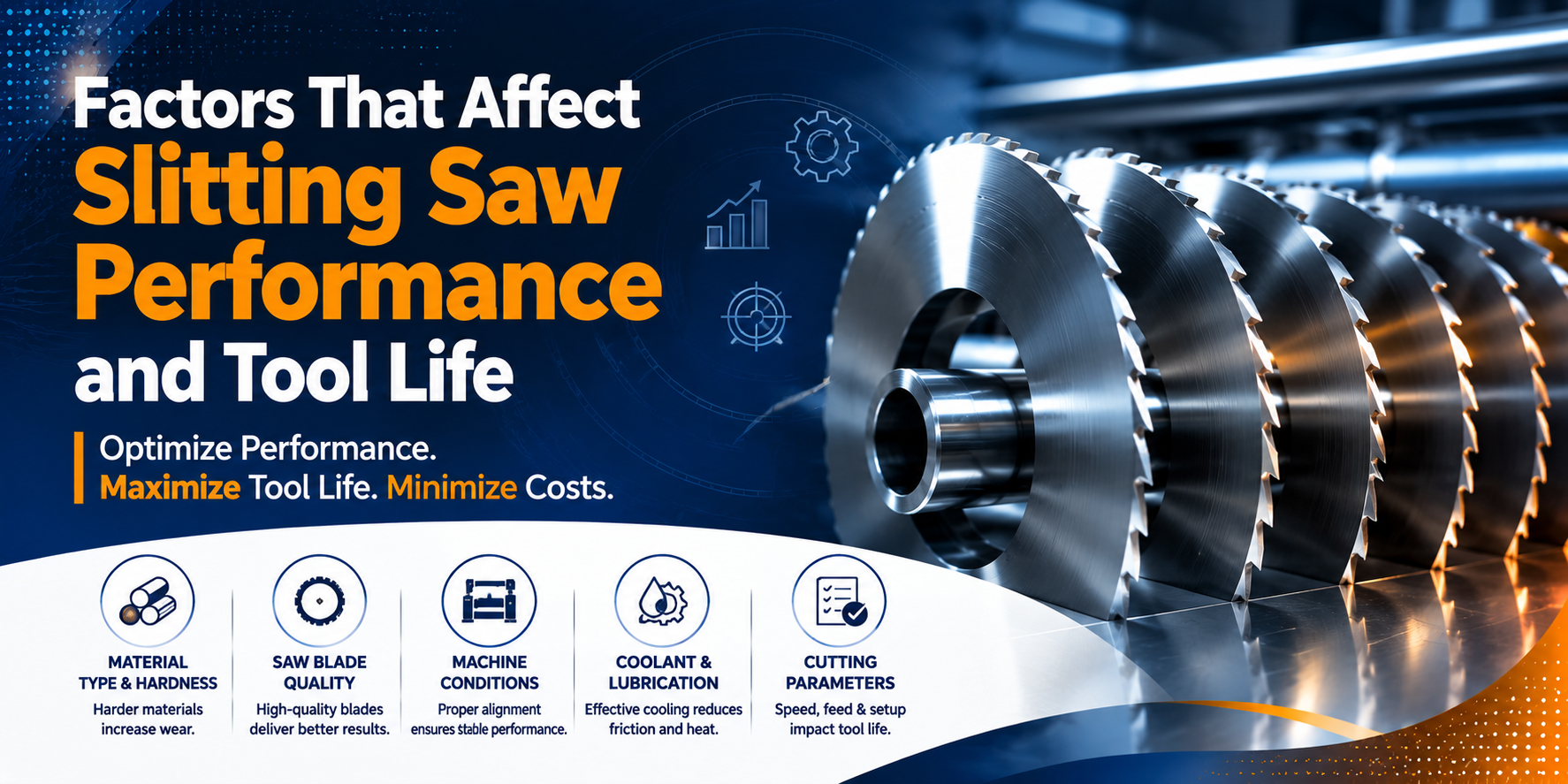
In precision machining operations, achieving accurate cuts and maximizing tool longevity are critical for maintaining productivity and reducing manufacturing costs. A slitting saw is a highly effective cutting tool used for slotting, grooving, and parting operations across a wide range of materials. However, its performance and lifespan depend on several key factors. Understanding these factors can help manufacturers optimize cutting efficiency, improve surface finish, and reduce tool replacement expenses.
1. Material Being Cut
The type and hardness of the workpiece material have a significant impact on cutting performance. Softer materials such as aluminum generally create less wear on cutting edges, while harder materials like stainless steel and hardened alloys generate more heat and friction.
Selecting the appropriate slitting saw for the material ensures smoother cutting, minimizes edge chipping, and extends tool life. Using an unsuitable blade can lead to premature wear, poor cut quality, and increased downtime.
2. Cutting Speed and Feed Rate
Proper cutting parameters are essential for achieving optimal results. Excessively high cutting speeds can cause overheating and rapid tool wear, while speeds that are too low may result in inefficient machining and poor productivity.
Similarly, incorrect feed rates can lead to vibration, tooth breakage, and uneven cuts. Manufacturers should follow recommended speed and feed guidelines based on the material type and blade specifications to maximize the performance of a slitting saw.
3. Tool Material and Coating
The quality of the cutting tool itself plays a major role in durability and efficiency. High-Speed Steel (HSS) slitting saws are suitable for general machining applications, while carbide slitting saws offer superior hardness, wear resistance, and cutting performance.
Advanced coatings such as TiN, TiCN, and TiAlN can further improve tool life by reducing friction and enhancing heat resistance. Choosing a high-quality blade with the appropriate coating can significantly improve machining efficiency.
4. Machine Stability and Rigidity
Even the best cutting tool cannot perform effectively on an unstable machine. Machine vibration, spindle runout, and inadequate clamping can negatively affect cutting accuracy and accelerate wear.
A rigid setup helps maintain consistent cutting conditions and reduces stress on the blade. Proper workpiece fixturing and machine maintenance contribute to better performance and longer service life.
5. Coolant and Lubrication
Heat is one of the primary causes of tool wear during machining operations. Proper coolant application helps dissipate heat, reduce friction, and prevent material buildup on cutting edges.
Using the correct coolant type and ensuring adequate flow to the cutting zone can greatly improve the efficiency and lifespan of a slitting saw. In many applications, proper lubrication also enhances surface finish and chip evacuation.
6. Blade Thickness and Tooth Design
Selecting the correct blade dimensions is crucial for achieving desired cutting results. Thinner blades reduce material waste and cutting forces but may be more susceptible to deflection. Thicker blades offer greater stability but require more power.
Tooth pitch and geometry should also match the application. Fine-pitch teeth are suitable for thin materials, while coarse-pitch designs are better for thicker workpieces and higher material removal rates.
7. Chip Removal Efficiency
Poor chip evacuation can lead to heat buildup, increased friction, and damage to cutting edges. Chips trapped within the cut may cause tool breakage or negatively affect surface quality.
Proper cutting parameters, coolant use, and tooth design help ensure efficient chip removal. Maintaining clear cutting paths allows the slitting saw to operate more effectively and consistently.
8. Regular Inspection and Maintenance
Routine inspection helps identify signs of wear before they affect production quality. Monitoring tooth condition, checking for cracks, and ensuring proper blade alignment can prevent unexpected failures.
Regular sharpening and maintenance practices help restore cutting performance and extend the useful life of the tool. Preventive maintenance is often far more cost-effective than replacing damaged blades.
Conclusion
The performance and longevity of a slitting saw depend on a combination of factors, including workpiece material, cutting parameters, machine stability, coolant usage, blade design, and maintenance practices. By carefully optimizing these elements, manufacturers can improve cutting precision, reduce downtime, and achieve greater operational efficiency. Investing in high-quality cutting tools and following best machining practices ensures consistent performance and maximizes return on investment.