
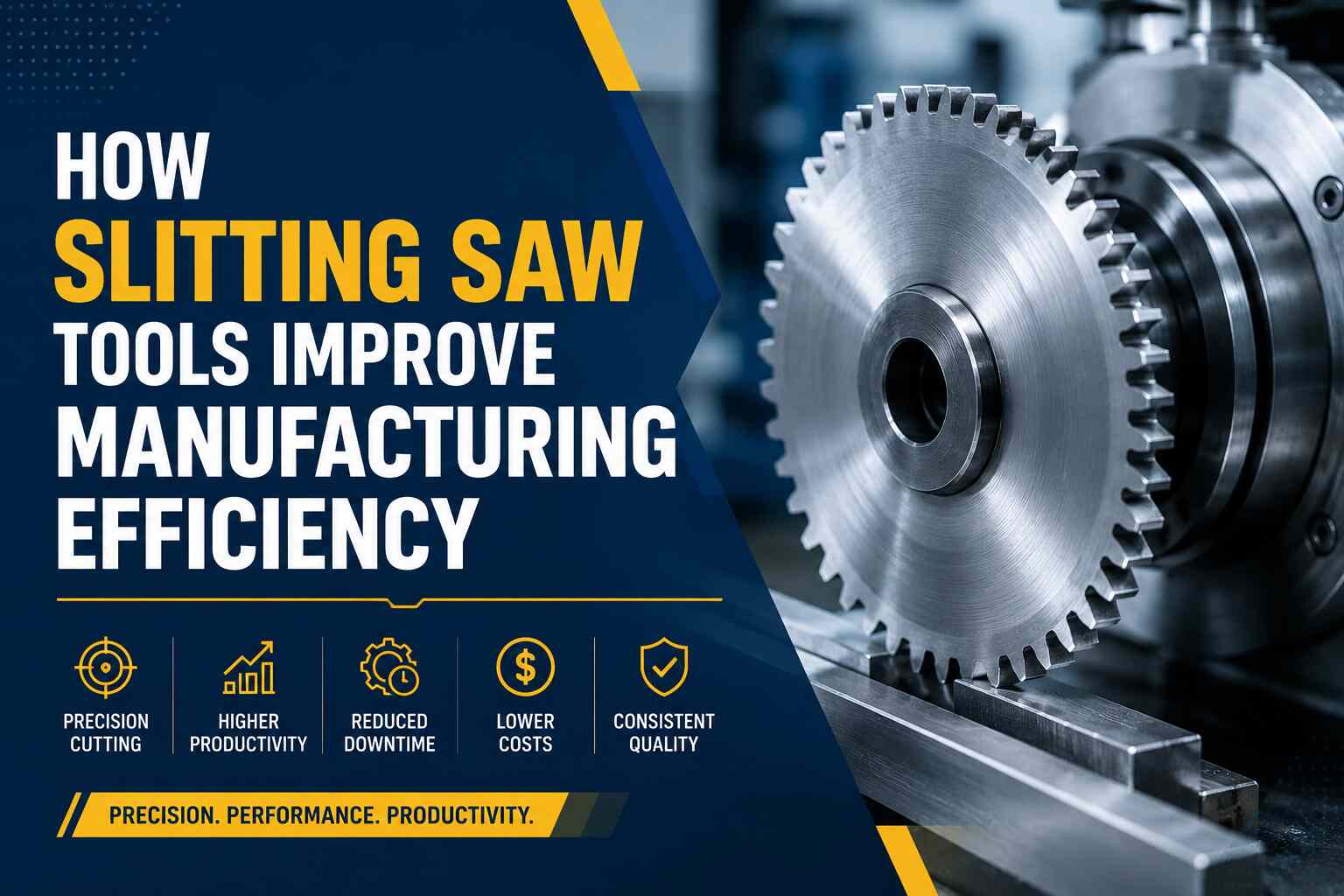
In today’s competitive industrial environment, manufacturers are constantly looking for ways to improve productivity, reduce waste, and achieve precise cutting results. One cutting tool that plays a vital role in enhancing operational performance is the slitting saw. Widely used across metalworking, automotive, aerospace, and fabrication industries, these tools are designed to deliver accurate and clean cuts while improving production speed and consistency.
A slitting saw is a circular cutting tool with multiple teeth around its edge, commonly mounted on milling machines or CNC systems. Its ability to create narrow slots, cut-offs, and grooves with exceptional precision makes it an essential component in modern manufacturing processes. By improving cutting efficiency and minimizing material loss, slitting saw tools help industries maintain high-quality standards while controlling production costs.
Precision Cutting Reduces Material Waste
One of the biggest advantages of using a slitting saw is its ability to provide highly accurate cuts with minimal kerf loss. In manufacturing, material waste directly impacts operational costs. Traditional cutting methods often remove excess material or create rough edges that require secondary finishing processes.
Slitting saw tools are engineered to make narrow and precise cuts, ensuring maximum material utilization. This precision is especially valuable in industries that work with expensive metals such as stainless steel, titanium, or aluminum. Reduced waste means manufacturers can optimize raw material usage and increase profitability without compromising product quality.
Faster Cutting Speeds Improve Productivity
Manufacturing efficiency depends heavily on production speed. Modern slitting saw tools are designed for high-speed cutting operations, allowing manufacturers to complete jobs more quickly compared to conventional cutting techniques.
The sharp teeth and durable construction of these tools enable smooth cutting even at higher machine speeds. This reduces cycle times and increases the number of components produced in a shorter period. Faster production not only improves output but also helps businesses meet tight deadlines and customer demands efficiently.
In automated CNC machining environments, slitting saw tools can operate continuously with consistent performance, further enhancing productivity across large-scale manufacturing operations.
Improved Surface Finish Minimizes Secondary Operations
Surface quality is a critical factor in manufacturing. Poorly cut materials often require additional grinding, polishing, or finishing, which increases labor costs and production time.
A high-quality slitting saw delivers clean and burr-free cuts, significantly reducing the need for secondary finishing operations. The precise tooth geometry ensures smoother edges and improved dimensional accuracy. This advantage is particularly important in industries such as aerospace and automotive manufacturing, where precision and surface quality are essential for component performance and safety.
By minimizing post-processing requirements, manufacturers can streamline production workflows and reduce overall operational costs.
Enhanced Tool Durability Reduces Downtime
Tool life plays a major role in manufacturing efficiency. Frequent tool replacements can interrupt production schedules and increase maintenance expenses. Modern slitting saw tools are manufactured using high-speed steel (HSS), carbide, or advanced coated materials that offer excellent wear resistance and durability.
These durable materials allow the tool to maintain sharpness for longer periods, even when cutting tough materials. As a result, manufacturers experience fewer machine stoppages and reduced downtime for tool changes.
Long-lasting tools also lower inventory and replacement costs, making slitting saws a cost-effective solution for high-volume production facilities.
Versatility Across Multiple Applications
Another reason why slitting saw tools improve manufacturing efficiency is their versatility. These tools can perform a wide range of cutting operations, including slotting, grooving, trimming, and cut-off applications.
Manufacturers can use the same cutting system for different materials and product designs, reducing the need for multiple specialized tools. Slitting saws are commonly used for cutting:
- Steel and stainless steel
- Aluminum and copper alloys
- Plastic and composite materials
- Tubes, bars, and sheets
This flexibility helps manufacturers simplify operations and improve machine utilization across various production tasks.
Better Accuracy in CNC Machining
CNC machining has transformed modern manufacturing by enabling automated and highly precise production processes. Slitting saw tools are ideal for CNC environments because they provide excellent repeatability and dimensional accuracy.
When integrated with CNC systems, slitting saws ensure consistent cuts across thousands of components. This level of precision reduces production errors, minimizes rejected parts, and improves overall product quality.
Accurate machining also enhances assembly efficiency because components fit correctly without additional adjustments or modifications. This contributes to smoother production lines and better operational performance.
Energy Efficiency and Reduced Cutting Force
Efficient manufacturing also involves reducing energy consumption and machine strain. Slitting saw tools are designed to cut with lower resistance compared to some traditional cutting methods.
The thin profile and optimized tooth design reduce cutting force, which lowers machine power requirements and minimizes vibration during operation. Reduced vibration improves cut quality while extending machine life.
Lower energy consumption not only helps manufacturers reduce operational expenses but also supports environmentally sustainable production practices.
Safer and More Reliable Operations
Workplace safety is an important aspect of manufacturing efficiency. Poor cutting tools can lead to unstable operations, material damage, or machine accidents. High-quality slitting saw tools provide stable and reliable cutting performance, reducing the risk of operational issues.
Their balanced design and precise cutting action improve operator confidence and machine safety. Reliable performance also reduces the chances of production interruptions caused by tool failure or poor-quality cuts.
Supporting High-Volume Manufacturing
Industries involved in mass production require tools that can maintain consistent performance under demanding conditions. Slitting saw tools are capable of handling high-volume production while maintaining accuracy and durability.
Their ability to perform repeated cutting operations with minimal wear makes them ideal for industries such as automotive manufacturing, metal fabrication, and industrial equipment production. Consistent cutting quality helps manufacturers maintain production standards and avoid costly quality control issues.
Conclusion
Modern manufacturing depends on speed, precision, and cost efficiency, and the slitting saw has become an essential tool for achieving these goals. From reducing material waste and improving cutting accuracy to increasing production speed and minimizing downtime, slitting saw tools play a critical role in optimizing industrial operations.
Their versatility, durability, and compatibility with CNC machining systems make them a valuable investment for manufacturers seeking long-term productivity improvements. By using advanced slitting saw solutions, companies can enhance operational efficiency, maintain product quality, and remain competitive in today’s fast-paced manufacturing industry.