
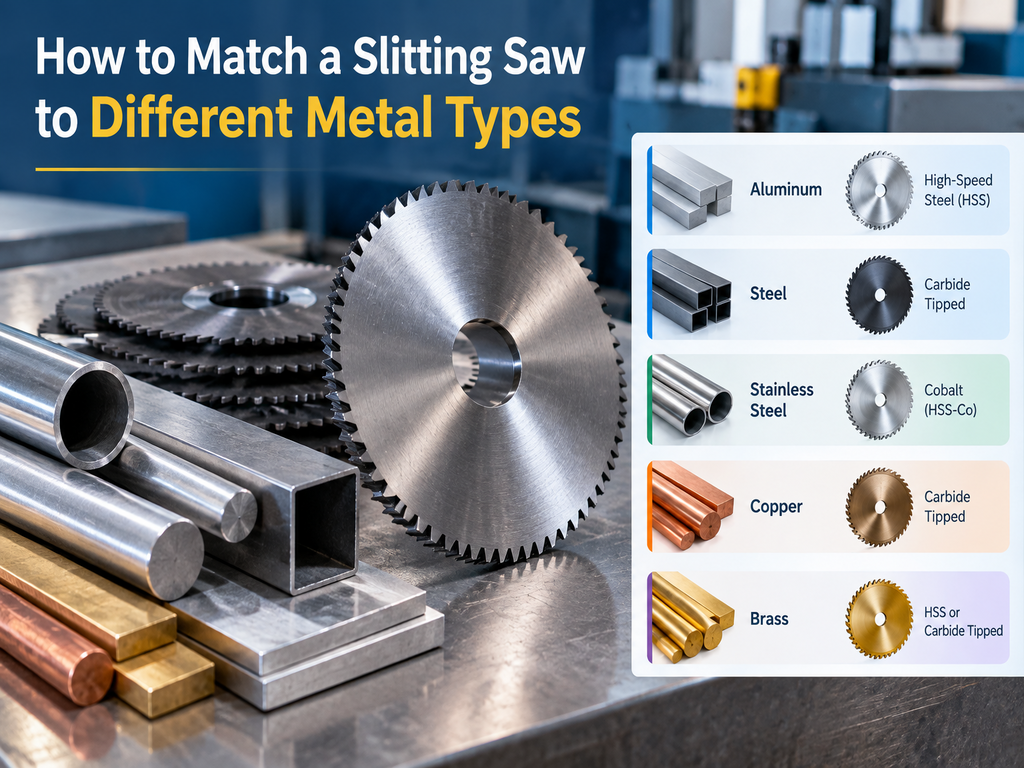
Selecting the right cutting tool for a machining application can have a significant impact on accuracy, surface finish, productivity, and tool life. Different metals respond differently to cutting because they vary in hardness, toughness, thermal conductivity, and chip-forming behaviour. Choosing a slitting saw based on the material being machined can therefore help produce cleaner cuts while reducing unnecessary wear and downtime.
For manufacturers working with materials ranging from aluminium to hardened steel, understanding the relationship between tool characteristics and material properties is an important part of machining preparation.
Understand the Material Before Selecting the Tool
The first step is identifying the exact metal and its condition. Two materials may appear similar but behave differently during cutting. Factors such as hardness, tensile strength, abrasiveness, and heat generation can influence tool selection.
It is also useful to consider whether the material is annealed, hardened, coated, forged, or otherwise treated. These characteristics can affect the cutting forces generated during machining.
Once the material properties are understood, the saw's diameter, thickness, tooth configuration, material, and cutting parameters can be evaluated.
Aluminium and Other Softer Metals
Aluminium is relatively soft and lightweight, but it can create challenges because it tends to produce long chips and may adhere to the cutting edge under unsuitable conditions.
When machining aluminium, a suitable saw should provide efficient chip clearance and a cutting geometry appropriate for non-ferrous materials. Adequate lubrication or coolant can also help reduce heat and prevent material from sticking to the tool.
The goal is to maintain a clean cutting action while avoiding excessive buildup on the teeth.
Carbon and Mild Steel
Carbon and mild steels are commonly machined in manufacturing environments and generally require a more durable cutting edge than softer non-ferrous metals.
For these materials, tooth configuration should be selected according to the thickness of the work piece and the desired cutting rate. A properly selected slitting saw should provide sufficient strength while maintaining consistent cutting performance.
Machine rigidity is also important. Excessive movement or vibration can accelerate tooth wear and negatively affect the cut.
Stainless Steel
Stainless steel can be more demanding because many grades are tough and generate considerable heat during machining. Some stainless steels can also work-harden when cutting conditions are not properly controlled.
Tool selection should therefore account for the specific stainless-steel grade and machining conditions. Appropriate cutting speeds, feeds, and coolant practices can help control heat and reduce premature wear.
Maintaining consistent engagement is particularly important when making narrow cuts in stainless steel.
Hardened Steels
Hardened steels present another level of difficulty because increased hardness can significantly raise cutting forces. The appropriate tool material and geometry depend on the hardness of the work piece and the specific operation.
In demanding applications, manufacturers may consider advanced cutting-tool materials and geometries designed to maintain edge strength under higher loads. Machine setup should also minimise vibration because instability can quickly damage a cutting edge.
Before selecting a tool for hardened material, it is important to review the manufacturer's recommended operating conditions.
Cast Iron
Cast iron has different cutting characteristics from steel and may produce abrasive particles during machining. This can contribute to tool wear, particularly when machining continuously or at high production volumes.
A durable cutting edge and suitable tooth configuration can help manage these conditions. Coolant requirements should also be evaluated because some cast-iron operations may be performed dry depending on the application and machining process.
Regular inspection can help identify wear before it begins affecting dimensional accuracy.
Copper, Brass, and Other Non-Ferrous Alloys
Copper and brass require consideration of their individual properties. Copper, for example, is relatively soft but can be ductile, while brass can vary considerably depending on its alloy and condition.
Tool geometry should promote efficient chip formation and minimise the possibility of material buildup. Cutting parameters should be adjusted according to the specific alloy rather than treating all non-ferrous materials identically.
Consider Tooth Count and Thickness
Material selection is only one part of the equation. Tooth count and saw thickness also influence performance.
A finer tooth configuration may be appropriate for certain thin or delicate materials, while coarser teeth can provide better chip clearance in other applications. Saw thickness should correspond with the required slot width and the rigidity needed during cutting.
Choosing an excessively thin tool for a demanding application may increase deflection, while an unnecessarily thick tool can remove more material than required.
Pay Attention to Cutting Parameters
Even the right tool can perform poorly if operating parameters are unsuitable. Cutting speed, feed rate, depth of cut, coolant, and machine rigidity all influence tool performance.
Starting with manufacturer-recommended parameters and making controlled adjustments based on the application is generally more effective than changing several variables simultaneously.
Monitoring cutting sound, vibration, chip formation, temperature, and edge wear can provide useful feedback.
Why Tool Quality Matters
A consistent manufacturing process requires cutting tools that meet the dimensional and material requirements of the application. Maxwell Slitter Industries focuses on precision cutting tools and manufacturing practices designed around demanding industrial applications.
Working with a knowledgeable tool manufacturer can help users evaluate material compatibility, tooth configuration, dimensions, and other factors before selecting a cutting solution.
Final Thoughts
Selecting the right cutting tool for a machining application can have a significant impact on accuracy, surface finish, productivity, Selecting the right cutting tool for a machining application can have a significant impact on accuracy, surface finish, productivity, and tool life. Different metals respond differently to cutting because they vary in hardness, toughness, thermal conductivity, and chip-forming behaviour. Choosing a slitting saw based on the material being machined can therefore help produce cleaner cuts while reducing unnecessary wear and downtime.
For manufacturers working with materials ranging from aluminium to hardened steel, understanding the relationship between tool characteristics and material properties is an important part of machining preparation.
Understand the Material Before Selecting the Tool
The first step is identifying the exact metal and its condition. Two materials may appear similar but behave differently during cutting. Factors such as hardness, tensile strength, abrasiveness, and heat generation can influence tool selection.
It is also useful to consider whether the material is annealed, hardened, coated, forged, or otherwise treated. These characteristics can affect the cutting forces generated during machining.
Once the material properties are understood, the saw's diameter, thickness, tooth configuration, material, and cutting parameters can be evaluated.
Aluminium and Other Softer Metals
Aluminium is relatively soft and lightweight, but it can create challenges because it tends to produce long chips and may adhere to the cutting edge under unsuitable conditions.
When machining aluminium, a suitable saw should provide efficient chip clearance and a cutting geometry appropriate for non-ferrous materials. Adequate lubrication or coolant can also help reduce heat and prevent material from sticking to the tool.
The goal is to maintain a clean cutting action while avoiding excessive buildup on the teeth.
Carbon and Mild Steel
Carbon and mild steels are commonly machined in manufacturing environments and generally require a more durable cutting edge than softer non-ferrous metals.
For these materials, tooth configuration should be selected according to the thickness of the work piece and the desired cutting rate. A properly selected slitting saw should provide sufficient strength while maintaining consistent cutting performance.
Machine rigidity is also important. Excessive movement or vibration can accelerate tooth wear and negatively affect the cut.
Stainless Steel
Stainless steel can be more demanding because many grades are tough and generate considerable heat during machining. Some stainless steels can also work-harden when cutting conditions are not properly controlled.
Tool selection should therefore account for the specific stainless-steel grade and machining conditions. Appropriate cutting speeds, feeds, and coolant practices can help control heat and reduce premature wear.
Maintaining consistent engagement is particularly important when making narrow cuts in stainless steel.
Hardened Steels
Hardened steels present another level of difficulty because increased hardness can significantly raise cutting forces. The appropriate tool material and geometry depend on the hardness of the work piece and the specific operation.
In demanding applications, manufacturers may consider advanced cutting-tool materials and geometries designed to maintain edge strength under higher loads. Machine setup should also mini mize vibration because instability can quickly damage a cutting edge.
Before selecting a tool for hardened material, it is important to review the manufacturer's recommended operating conditions.
Cast Iron
Cast iron has different cutting characteristics from steel and may produce abrasive particles during machining. This can contribute to tool wear, particularly when machining continuously or at high production volumes.
A durable cutting edge and suitable tooth configuration can help manage these conditions. Coolant requirements should also be evaluated because some cast-iron operations may be performed dry depending on the application and machining process.
Regular inspection can help identify wear before it begins affecting dimensional accuracy.
Copper, Brass, and Other Non-Ferrous Alloys
Copper and brass require consideration of their individual properties. Copper, for example, is relatively soft but can be ductile, while brass can vary considerably depending on its alloy and condition.
Tool geometry should promote efficient chip formation and mini mize the possibility of material buildup. Cutting parameters should be adjusted according to the specific alloy rather than treating all non-ferrous materials identically.
Consider Tooth Count and Thickness
Material selection is only one part of the equation. Tooth count and saw thickness also influence performance.
A finer tooth configuration may be appropriate for certain thin or delicate materials, while coarser teeth can provide better chip clearance in other applications. Saw thickness should correspond with the required slot width and the rigidity needed during cutting.
Choosing an excessively thin tool for a demanding application may increase deflection, while an unnecessarily thick tool can remove more material than required.
Pay Attention to Cutting Parameters
Even the right tool can perform poorly if operating parameters are unsuitable. Cutting speed, feed rate, depth of cut, coolant, and machine rigidity all influence tool performance.
Starting with manufacturer-recommended parameters and making controlled adjustments based on the application is generally more effective than changing several variables simultaneously.
Monitoring cutting sound, vibration, chip formation, temperature, and edge wear can provide useful feedback.
Why Tool Quality Matters
A consistent manufacturing process requires cutting tools that meet the dimensional and material requirements of the application. Maxwell Slitter Industries focuses on precision cutting tools and manufacturing practices designed around demanding industrial applications.
Working with a knowledgeable tool manufacturer can help users evaluate material compatibility, tooth configuration, dimensions, and other factors before selecting a cutting solution.
Final Thoughts
Matching a slitting saw to the correct metal is about more than simply choosing a tool based on material name. Aluminium, steel, stainless steel, cast iron, and non-ferrous alloys all have different machining characteristics that influence tool selection.
By considering hardness, toughness, chip formation, heat generation, tooth configuration, thickness, and cutting parameters, manufacturers can make more informed decisions. Proper selection and setup can help improve cutting consistency, extend tool life, and maintain the quality of the finished component.