
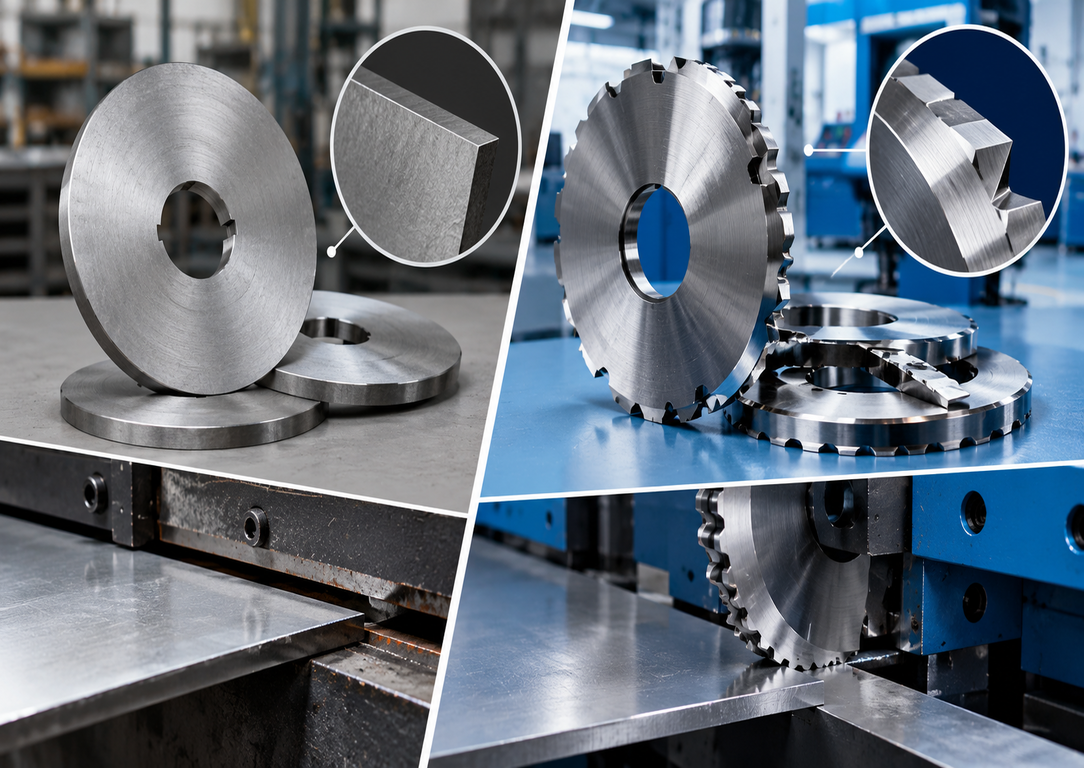
Cutting requirements can vary considerably from one manufacturing operation to another. A blade that works well for one machine or material may not deliver the same results in a different setup. This is one reason manufacturers often compare custom and standard Shear blades when planning industrial cutting processes.
Standard blades are designed around commonly used specifications and can be a practical choice for many applications. Custom blades, however, are developed around particular machine requirements, materials, dimensions, and operating conditions. Understanding the difference can make it easier to determine which type fits a specific cutting process.
What Are Standard Shear Blades?
Standard blades are generally manufactured according to commonly used dimensions, profiles, and material specifications. Their standardised design makes them suitable for applications where the machine and cutting requirements fall within typical industry ranges.
One of the main advantages of standard blades is simplicity. If a replacement blade matches the required dimensions and specifications, it can often be selected without extensive customisation.
For routine cutting operations involving commonly processed materials, standard options may provide a straightforward solution. They are also easier to compare because their specifications tend to follow established formats.
However, standardised dimensions cannot account for every possible production environment.
What Makes a Blade Custom?
Custom blades are designed or modified to meet specific application requirements. Instead of starting with a general-purpose specification, the blade can be developed around factors such as machine dimensions, material type, thickness, cutting angle, tolerances, and production conditions.
For example, a manufacturer may need a particular blade length, thickness, hole pattern, edge configuration, or hardness level that is not readily available in a standard product.
The purpose of customisation is not simply to make a blade different. It is to make the blade more compatible with the conditions under which it will be used.
Material Selection Can Be More Specific
The material being cut has a major influence on blade requirements. Aluminum, stainless steel, mild steel, and other materials can behave differently during shearing.
Custom Shear blades can be specified with material characteristics suited to the application. Factors such as hardness, toughness, wear resistance, and resistance to chipping may all be considered.
This is particularly useful when a production process involves materials that are abrasive, difficult to cut, unusually thin, or particularly demanding.
Geometry Can Be Tailored to the Application
Blade geometry is another important distinction. Standard blades generally follow predetermined profiles, while custom blades can be manufactured with specific edge angles, dimensions, or configurations.
Small changes in geometry can influence how cutting forces are distributed. The right configuration can help achieve cleaner separation and reduce unnecessary stress on the machine and work piece.
The ideal geometry depends on the machine and material, so there is no single design that works equally well for every application.
Machine Compatibility Matters
Every shearing machine has its own requirements. Blade length, mounting holes, thickness, alignment, and overall dimensions all need to work with the equipment.
A standard blade may be suitable when the machine follows common specifications. But older equipment, specialised machinery, or modified production lines may require dimensions that are less common.
Custom blades can address these requirements by being produced around the actual machine configuration rather than forcing the machine to accommodate a standard format.
Customisation and Cutting Consistency
Consistency is especially important in production environments where the same cutting operation is repeated many times. A blade that fits correctly and matches the application's cutting conditions can contribute to more predictable results.
Poor compatibility, by comparison, may lead to uneven cutting, excessive wear, burr formation, or increased maintenance requirements.
This does not mean that custom blades automatically provide better results in every situation. Their value depends on whether the application has requirements that standard specifications cannot adequately address.
When Should Manufacturers Consider Custom Blades?
Customisation may be worth considering when standard blades do not match the required dimensions, material characteristics, cutting geometry, or machine configuration.
It can also make sense when an operation has unusual tolerances or recurring issues that appear to be connected to blade design or compatibility.
Before choosing between standard and custom options, manufacturers should review the complete cutting process. Machine specifications, work piece material, thickness, production volume, cutting conditions, and maintenance practices can all influence the decision.
The Role of Experienced Blade Manufacturing
Producing a custom blade requires more than simply changing its dimensions. The design has to account for how the blade will interact with the machine and material during actual operation.
Companies such as Maxwell Slitter Industries work within the broader industrial cutting-tool sector, where factors such as precision manufacturing, material selection, and application requirements are important considerations when developing cutting components.
Conclusion
The main difference between custom and standard Shear blades is the level of application-specific design. Standard blades follow commonly used specifications and can work well for conventional cutting requirements. Custom blades, on the other hand, can be developed around particular machine configurations, materials, dimensions, and cutting conditions.
Choosing between the two starts with understanding the actual requirements of the operation. When standard specifications provide a suitable match, customisation may not be necessary. When an application has unusual or demanding requirements, a custom approach can provide greater compatibility and allow the blade design to reflect the specific cutting process.